


Hours to a few weeks
1. Aerobic phase
Oxygen from the atmosphere is present when the waste is placed. Aerobic bacteria survive until it is depleted; the products are carbon dioxide and water vapour.
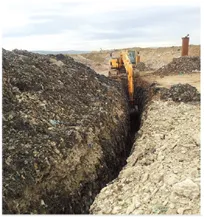
Landfill gas (LFG) is a complex mix of gases created by microorganisms within a landfill — roughly 40–60% methane, with the remainder mostly carbon dioxide.
Trace amounts of other volatile organic compounds (VOCs) make up the remaining <1%, mainly simple hydrocarbons. Left uncontrolled, methane escapes to the atmosphere as a far stronger greenhouse gas than CO₂; collected and utilised, it becomes a reliable energy source.
1 million t / year
500 m³/h
1 MW (≈ 8,000 MWh/yr)
electricity demand
| Component | % |
|---|---|
| Methane | 45 – 70 |
| Carbon dioxide | 30 – 55 |
| Nitrogen | 2 – 5 |
| Oxygen | 0,1 – 1 |
| Ammonia | 0,1 – 1 |
| Sulphur | 0 – 1 |
| Water vapour | 1 – 3 |
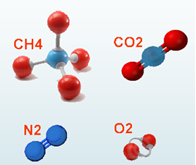
Oxygen from the atmosphere is present when the waste is placed. Aerobic bacteria survive until it is depleted; the products are carbon dioxide and water vapour.
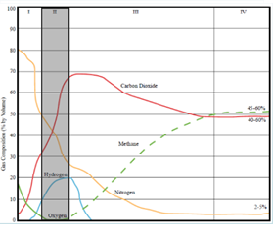
Organic acids start forming from aerobic-phase compounds and more CO₂ is produced. Anaerobic decomposition begins; the cell is highly acidic and acids dissolve nutrients with moisture.
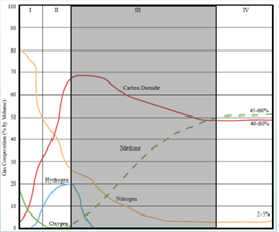
Some anaerobic bacteria consume the organic acids; the cell becomes more neutral and methane-producing bacteria establish themselves. H₂ is exhausted while CO₂ and N₂ fall.
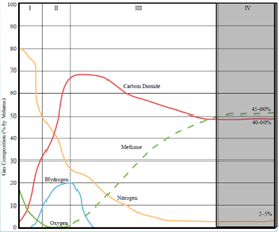
LFG production stabilises at 45–60% CH₄, 40–60% CO₂ and 2–9% other gases. This production can last 20 years or more.
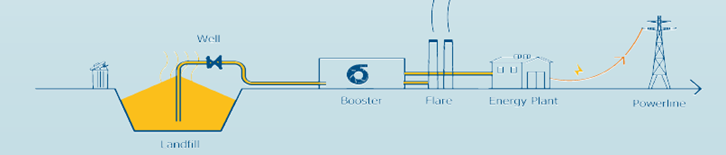
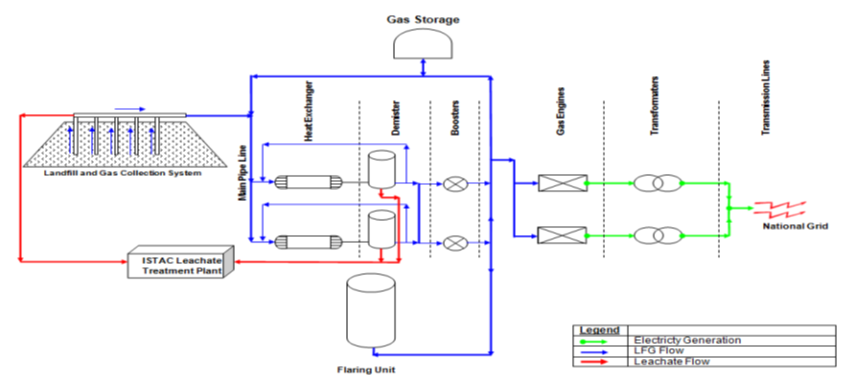
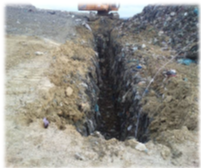
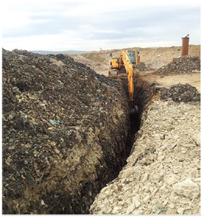
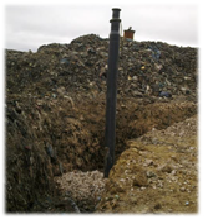
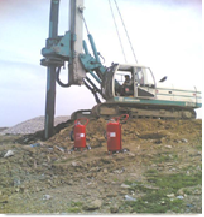
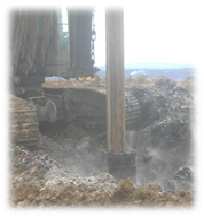
Horizontal or vertical gas collection wells
Condensate and gas treatment systems
Blower
Many LFG systems are also equipped with a flare unit to burn excess gas or for use during downtime of the energy recovery plant.

If you have any questions or need help, feel free to contact our team — or call us any time.