

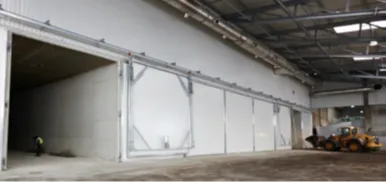
Dry Fermentation – Bach Method
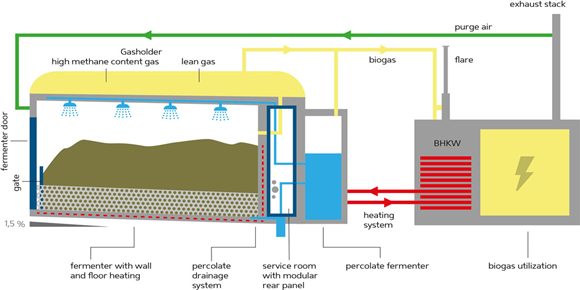
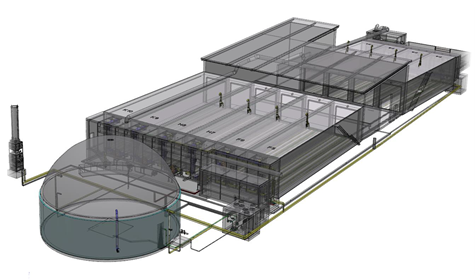
Dry fermentation: municipal waste is mechanically separated, the organic fraction is moved into closed garages (tunnels) and biogas is produced under anaerobic conditions by spraying liquid percolate.
A proven waste treatment method born in Germany
The MBT concept originated in Germany, where it is an established waste treatment method. Regulatory restrictions on landfill space, subsequent landfill bans, the search for alternatives to incineration and the rising cost of disposal have been the main drivers of these technologies.
Growth is mainly driven by European energy and waste legislation such as the Landfill Directive and the Waste Framework Directive. RENESCO primarily serves internationally operating, integrated waste treatment companies.

Together with our technology partner WTT (Waste Treatment Technologies) we deliver Europe's leading MBT solutions.
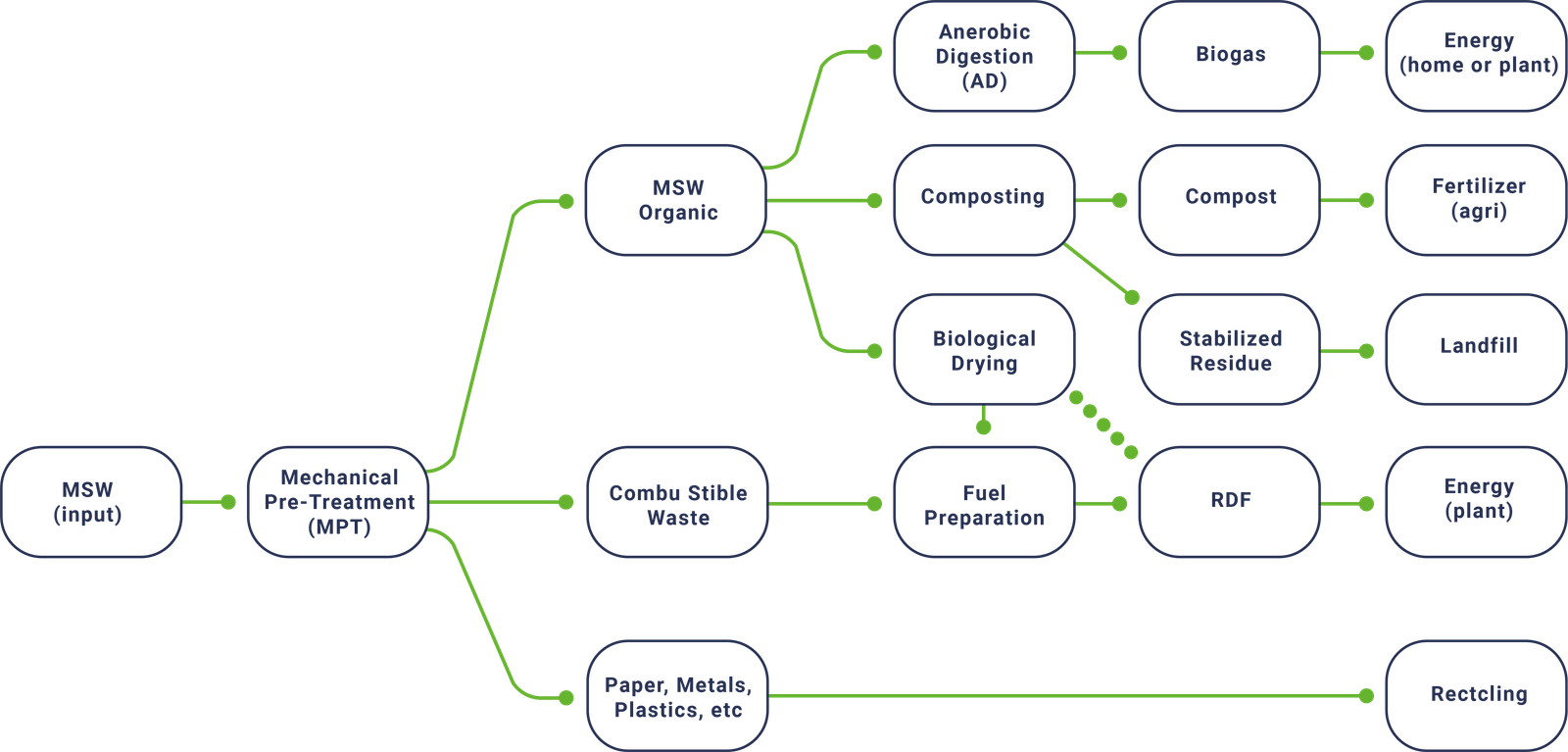
Biological treatment
Anaerobic digestion (AD) is the economically and politically preferred treatment for organic waste streams. We supply two AD systems to find the optimal solution for each case: the dry AD batch process and wet AD systems. Composting, bio-drying and the biological tunnel process are controlled per batch, and a wide range of odour-reduction systems — including bio-filtration and air humidification — is available.
Mechanical treatment
We design and build the most efficient and sustainable integrated mechanical solutions — without adequate mechanical treatment, aerobic and anaerobic biological processes will not function. Working with suppliers worldwide, we always select the most suitable equipment for our clients, whatever technology is required.
Mechanical biological treatment (MBT)
We believe integrating mechanical and biological technology in waste treatment plants is the way forward. Integrated MBT installations recover the maximum value from waste.
Turnkey & service
The turnkey approach makes us owner of the complete process technology. Service packages cover plant audits, training and full management of spare and wear parts, at attractive prices thanks to bulk purchasing.
Wet, semi-dry and dry systems
The industrial version of a natural process found in swamps; AD plant, fermentation plant, digestion plant and biogas plant are different names for the same process.
Wet system
Biomass is turned into a soup and digested in a stirred-tank reactor.
Continuous
Semi-dry system
Biomass is sludge-like and digested in a plug-flow reactor.
Continuous
Dry system
Biomass is solid and digested in a tunnel without dilution.
Discontinuous (batch process)
Anaerobic digestion (O₂ < 1%)
- Biomass + heat ⇒ inerts + CH₄ + CO₂
- Endothermic (heat demand)
- Biogas in the system (explosive)
- 3–4 weeks duration
- End product: digestate (not compost)
- Lignin is not decomposed
Composting (O₂ > 8%)
- Biomass + oxygen
- Exothermic (heat production)
- Air in the system
- 2–8 weeks duration
- End product: compost
- Lignin (woody material) is decomposed
Optimal dry AD process parameters
Turning organic material into a stable product
We prefer the tunnel system (in-vessel composting) because it offers:
- Control of all parameters
- Shortest processing time
- Control of all emissions
- Lowest possible footprint with a spigot aeration system
- Internal air recycling for maximum process control while keeping the building under negative pressure
- Automated water spraying for moisture control
- Low staff exposure to contaminated air
Comparison of composting systems
| Criteria | Tunnel (in-vessel) | Aerated pile (windrow) |
|---|---|---|
| Footprint | ||
| Reliability | ||
| Odour control | ||
| Working conditions | ||
| Process control |
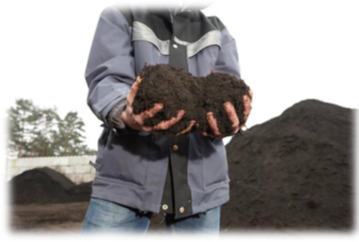

Composting phase: “Hygienisation”
- Kills pathogens and weed seeds
- Necessary to make quality compost from food waste
- Different legislation per country
- Australian standard: 3 days above 60 °C
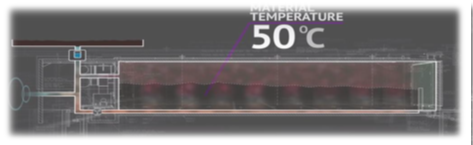
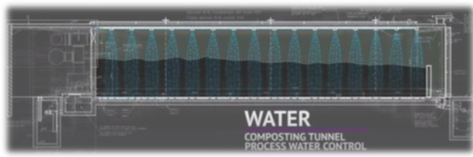
Composting process parameters
Optimal set points are the operators' responsibility; the software maintains them. Tunnel filling/mixing is a human operation.
Talk to our experts about your project
If you have any questions or need help, feel free to contact our team — or call us any time.